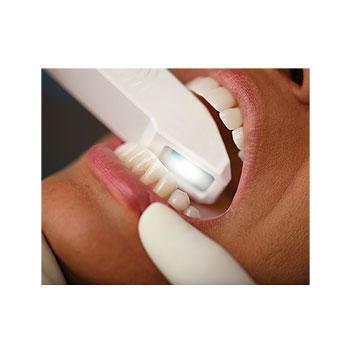
Traditional dental impressions require placing a clay-like impression material, such as alginate or silicone, into a tray, pressing it over the teeth, waiting for it to set, and then removing it. The process can take time and may feel uncomfortable. With newer technology, a pen-shaped intraoral scanner captures a digital impression quickly and comfortably. The scan data can then be sent directly to the dental laboratory to begin fabrication of the restoration, potentially reducing turnaround time.
Digital Dental Impression Scanner